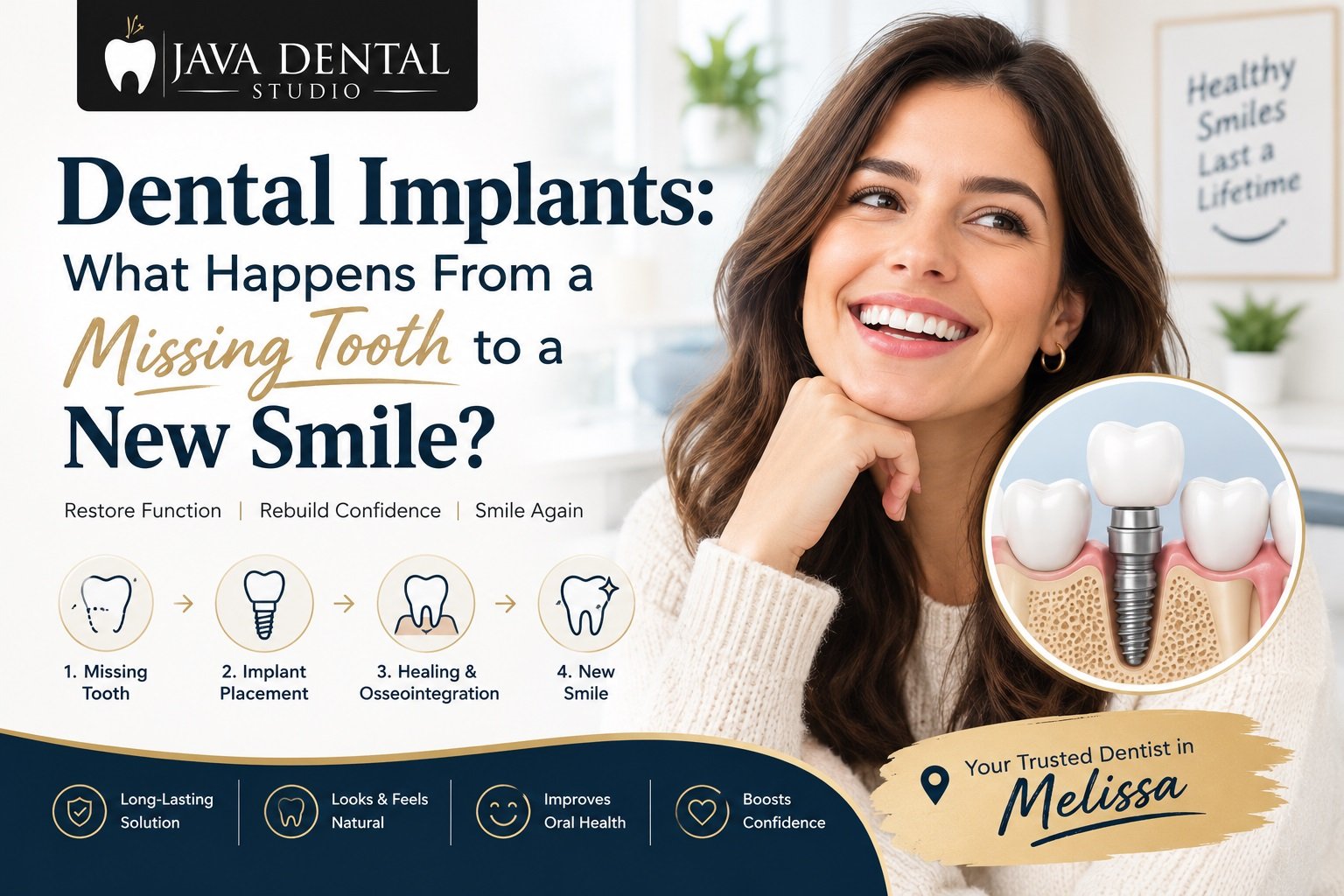
Getting a dental implant is an important step toward restoring your smile, but what you do after treatment matters, too.
The way you clean your teeth, care for your gums, manage everyday habits, and attend follow-up appointments can all influence the long-term health of your implant.
Unlike natural teeth, dental implants cannot develop cavities. However, the gums and bone surrounding them can still develop problems. Plaque buildup, inflammation, excessive biting forces, and inadequate maintenance may affect the tissues supporting an implant.
The good news is that consistent care can help you protect your investment and maintain a healthy mouth.
If you have received or are considering dental implants in Melissa, here are eight practical habits to understand, from the early healing period to everyday implant maintenance.
1. Follow Your Dentist’s Instructions During Healing
The first stage of implant aftercare begins immediately after surgery. Your mouth needs time to heal, and the instructions you receive should guide your recovery.
Your care routine may depend on whether you had a straightforward implant placement, a tooth extraction, bone grafting, or a more extensive procedure.
During the initial healing period, your dentist may recommend:
- Eating soft foods for the period specified in your instructions.
- Avoiding chewing directly over the surgical site.
- Taking prescribed medication as directed.
- Keeping the area clean using the recommended technique.
- Avoiding strenuous physical activity for the period advised.
- Avoiding smoking and other tobacco products during healing.
Do not brush aggressively over a fresh surgical site or rinse forcefully unless your dental team has instructed you to do so.
Some discomfort, swelling, and minor bleeding can occur after implant surgery. However, symptoms that worsen rather than improve, persistent bleeding, fever, or increasing swelling warrant prompt contact with your dental provider. Difficulty breathing or swallowing requires emergency medical attention.
Remember: Your implant may eventually become part of your everyday routine, but the early healing period requires additional care. Follow your specific post-operative instructions rather than relying on a general aftercare schedule.
2. Brush Twice Daily Without Scrubbing Too Hard
Brushing remains one of the most important habits for maintaining healthy teeth and gums after implant treatment.
Although the implant itself cannot develop tooth decay, plaque can accumulate around the implant crown and along the gumline. If that plaque is not removed regularly, the surrounding tissues can become inflamed.
Use a soft-bristled toothbrush and fluoride toothpaste to clean your natural teeth and implant-supported restoration. Brush gently along the gumline, paying attention to the areas where the crown meets the surrounding tissues.
An electric toothbrush may also be useful if you find it easier to maintain a consistent cleaning routine with one.
The key is to clean thoroughly without damaging the gums or disturbing a healing surgical site.
During early recovery, ask your dentist when and how to brush near the implant. Once the site has healed, return to a consistent twice-daily routine, following any individualized instructions you have received.

3. Clean Between Your Teeth and Around the Implant Every Day
A toothbrush cannot reach every surface around your teeth. The same applies to implant-supported crowns and bridges.
Food particles and plaque can collect beneath the gumline and in the spaces between an implant and neighbouring teeth. These areas need attention even when your implant feels comfortable and looks completely normal.
Depending on your restoration, your dental team may recommend:
- Dental floss designed for the spaces you need to clean.
- Interdental brushes sized to fit around the restoration.
- A water flosser as part of your daily cleaning routine.
- Specialized cleaning aids for implant-supported bridges or dentures.
The correct tool depends on the shape of your restoration and the amount of space available around it.
For example, cleaning around a single implant crown is different from cleaning beneath a full-arch implant-supported bridge. A tool that works well for one restoration may not work as effectively for another.
Ask your dentist or hygienist to demonstrate the best technique for your particular implant. A short demonstration can make your home-care routine more effective and comfortable.
4. Choose Foods That Support Your Recovery and Long-Term Oral Health
Your diet matters at two different stages: while the implant site is healing and after your final restoration is in place.
Immediately after surgery, hard, crunchy, sticky, or chewy foods may irritate the surgical area or place unwanted pressure on it. Your dentist will advise you when you can gradually return to your usual diet.
During recovery, suitable soft foods may include eggs, yogurt, cooled oatmeal, mashed vegetables, and other foods that are easy to chew. Follow any specific dietary restrictions provided by your dental team.
Once healing is complete, you can generally enjoy a varied diet according to your dentist’s guidance. However, some everyday habits deserve attention.
Be mindful of these foods and habits
- Very hard foods: Chewing ice or biting hard objects can damage natural teeth and may chip a dental crown.
- Sticky foods: These may be difficult to clean from certain restorations and can contribute to plaque retention.
- Frequent sugary snacks and drinks: Although implants cannot develop cavities, natural teeth remain vulnerable to decay, and frequent sugar exposure can affect overall oral health.
- Using teeth as tools: Opening packaging or biting non-food objects can place unnecessary stress on teeth and restorations.
You do not need a special lifelong diet simply because you have an implant. The goal is to eat comfortably, maintain balanced nutrition, and avoid habits that could damage your teeth or dental work.
5. Keep Every Recommended Dental Checkup
An implant can look healthy on the outside while developing a problem that is not immediately obvious.
Regular dental examinations allow your dentist to assess the implant, surrounding gums, supporting tissues, and the condition of the restoration.
During maintenance visits, your dental team may evaluate:
- Whether the gums around the implant look healthy.
- Whether there are signs of bleeding or inflammation.
- Whether the implant-supported crown or bridge is stable.
- Whether your bite places excessive pressure on the restoration.
- Whether additional cleaning or imaging is appropriate.
Professional cleaning around implants may also be recommended according to your individual needs.
The frequency of these visits varies. Some patients need more frequent monitoring because of previous gum disease, difficulty cleaning around a restoration, smoking, or other risk factors.
Do not assume that a standard six-month interval is always sufficient. Follow the schedule recommended for your oral health.
6. Protect Your Implant From Teeth Grinding and Excessive Pressure
Do you wake up with a sore jaw, experience frequent morning headaches, or notice that your teeth feel sensitive after sleeping?
These symptoms can have several causes, but they may sometimes be associated with teeth grinding or clenching, known as bruxism.
Repeated excessive forces can contribute to wear or damage involving natural teeth and dental restorations. Implant-supported crowns and bridges can also experience mechanical complications, including loosening or fractures.
If you grind your teeth, tell your dentist before or after implant treatment. Your dentist can assess your bite and determine whether a protective night guard or another measure is appropriate.
A night guard is not necessary for everyone with an implant. Its suitability depends on your bite, symptoms, restoration, and overall dental condition.
You should also avoid chewing pens, biting fingernails, cracking hard objects with your teeth, or using your teeth to open packages.
Protecting an implant involves more than keeping it clean. It also means reducing unnecessary stress on the restoration.
7. Avoid Tobacco and Manage Factors That Affect Gum Health
Healthy gums and supporting bone are essential for the long-term function of a dental implant.
Smoking and tobacco use can interfere with healing and are associated with a greater risk of implant-related complications. If you smoke, discuss your tobacco use openly with your dentist. They can explain how it may affect your treatment and help you plan for safer healing.
Other factors may influence implant maintenance, too.
For example, people with diabetes may need to pay particular attention to blood glucose management and follow-up care. A history of periodontal disease can also increase the importance of monitoring the tissues around an implant.
These factors do not automatically mean that implant treatment will fail. They mean that your care plan should reflect your individual health circumstances.
Keep your dentist informed about relevant medical conditions, medication changes, and any new symptoms. Good communication helps the dental team make appropriate recommendations for your ongoing care.
8. Learn the Warning Signs of Implant Problems
A healthy implant should not be ignored simply because it feels stable.
Knowing what changes to watch for can help you seek an assessment before a problem becomes more complicated.
Contact your dentist if you notice:
- Persistent or recurring bleeding around the implant.
- Swollen, red, or tender gums.
- Pus or an unusual discharge around the implant.
- New or increasing discomfort.
- A crown or bridge that feels loose.
- A change in your bite.
- Difficulty cleaning around the restoration because of a new change in fit.
One condition worth understanding is peri-implantitis. This is an inflammatory disease affecting the tissues around a dental implant that can involve the loss of supporting bone. It differs from a cavity in a natural tooth and requires professional evaluation.
Not every instance of bleeding or discomfort means an implant is failing. However, persistent symptoms should not be dismissed or treated solely with home remedies.
If your implant-supported crown becomes loose, avoid repeatedly testing it or attempting to tighten it yourself. Arrange a dental assessment so the cause can be identified and addressed appropriately.
How Long Can Dental Implants Last With Proper Care?
Dental implants can function for many years, but no specific lifespan can be guaranteed.
Long-term outcomes depend on several factors, including the condition of the supporting bone, gum health, oral hygiene, smoking, general health, biting forces, and the design and maintenance of the restoration.
It is also important to distinguish between the implant itself and the visible crown or bridge attached to it. The implant may remain stable while the restoration experiences wear or requires repair or replacement.
That is why long-term implant care involves monitoring the entire restoration, not just the implant post.
Consistent home cleaning, professional examinations, prompt attention to symptoms, and following your dentist’s recommendations all contribute to maintaining your oral health.
Frequently Asked Questions About Dental Implant Aftercare
How often should I clean my dental implants?
Clean your teeth twice daily and clean between your teeth and around the implant every day, using tools suited to your restoration. Follow your dentist’s instructions during the initial healing period and ask for a demonstration if you are unsure how to clean a particular area.
Can I use an electric toothbrush on dental implants?
An electric toothbrush can be suitable for many patients with dental implants. Choose an appropriate brush head and use a gentle technique. If you have recently undergone surgery, ask your dentist when you can begin brushing near the surgical site.
Do dental implants need professional cleaning?
Yes. Professional maintenance allows your dental team to evaluate the surrounding tissues, check the restoration, and remove deposits that home cleaning may not adequately address. Your recommended visit schedule will depend on your individual needs.
Can dental implants develop gum disease?
The implant itself cannot develop gum disease, but the tissues around it can become inflamed. Peri-implant mucositis affects the soft tissues, while peri-implantitis can involve supporting bone loss. Both conditions require appropriate attention.
What should I avoid after dental implant surgery?
Follow the specific instructions provided by your dentist. Depending on the procedure, you may need to avoid hard foods, smoking, vigorous rinsing, strenuous exercise, or direct pressure on the surgical site during early healing.
When should I contact my dentist about an implant?
Seek an assessment for persistent bleeding, swelling, pus, increasing discomfort, a loose restoration, or changes in your bite. Significant swelling, fever, or worsening symptoms after surgery warrant prompt contact with your dental provider.
Personalized Dental Implant Care at Java Dental Studio
Dental implants can restore function and help fill the gap left by a missing tooth, but maintaining that result involves more than the original procedure. Daily cleaning, healthy habits, professional monitoring, and attention to early warning signs all play a role.
The most useful approach is to make implant care part of your everyday oral hygiene routine.
Replacing a missing tooth is a significant decision, and caring for the result deserves the same attention as the treatment itself. At Java Dental Studio, we believe patients should understand not only their treatment options but also what it takes to maintain their oral health afterward.
Serving Melissa and surrounding communities, our practice combines personalized treatment planning, modern dental techniques, and a focus on long-term oral health.
Our dental services include implants, crowns, bridges, preventive care, and other restorative treatments, helping patients discuss their tooth replacement needs as part of their broader dental health.
Planning dental implants in Melissa? Contact Java Dental Studio to schedule an implant consultation and discuss a treatment plan tailored to your oral health, restoration needs, and long-term maintenance.