A child who feels comfortable at the dentist is more likely to approach dental visits with confidence as they grow. But finding the right dentist involves more than choosing a nearby office or scheduling appointments around school hours.
Parents also need to consider how the dental team communicates with children, handles anxiety, monitors developing teeth, and helps families prevent future dental problems.
When searching for the best dentist in Melissa, it helps to look beyond online ratings and consider the kind of experience your child will have over time.
The right dental practice should make preventive care understandable, address concerns early, and help children build habits that support healthy teeth and gums.
Here are seven important things to consider before choosing a dentist for your child.
1. Look for Experience With Children at Different Ages
A toddler’s dental needs differ considerably from those of a school-age child or teenager.
Young children are developing their first teeth, learning to brush, and becoming familiar with dental visits. Older children may need guidance about permanent teeth, cavities, sports-related dental injuries, or orthodontic concerns.
Consider whether the dentist regularly treats children at your child’s stage of development and can adapt appointments to their needs.
Pediatric dentists complete additional specialty training focused on children’s oral health, development, and behaviour guidance. Family dentists may also provide children’s dental care, depending on their training, experience, and practice scope.
The important consideration is whether the provider can deliver appropriate care for your child’s age and individual circumstances.
2. Pay Attention to How the Dental Team Handles Fear
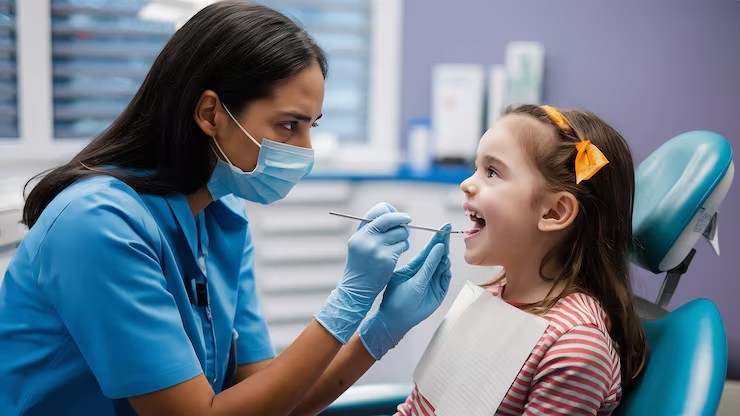
Children do not always know how to explain dental anxiety. Some become quiet, while others cry, resist opening their mouths, or repeatedly ask whether a procedure will hurt.
A supportive dental team recognizes that these reactions can be part of a child’s unfamiliarity with the environment. Instead of expecting every child to cooperate immediately, the team should communicate in an age-appropriate way and help the child understand what is happening.
You can look for an approach that includes:
- Explaining procedures in simple, reassuring language.
- Giving children time to become familiar with the dental environment.
- Encouraging questions without making children feel embarrassed.
- Explaining instruments and procedures before using them.
- Discussing appropriate behaviour-guidance options when a child needs additional support.
Parents can help, too. Talk about the visit in a positive, matter-of-fact way, and avoid using dental treatment as a threat or punishment.
If your child has significant anxiety or difficulty tolerating treatment, discuss this with the dental team before the appointment. The appropriate approach will depend on the child’s needs and the treatment involved.
3. Make Sure Prevention Is More Than a Quick Cleaning
A dental cleaning is only one part of a child’s preventive care.
Regular examinations can help the dentist monitor tooth development, assess gum health, identify early signs of decay, and determine whether additional preventive measures may be useful.
Parents should also receive practical guidance about brushing, flossing, fluoride, diet, and habits that may affect oral development.
Children must receive an initial dental examination when their first tooth appears or by their first birthday, whichever comes first. Early visits help establish a dental home and allow parents to discuss oral hygiene, feeding habits, and cavity prevention.
During routine visits, ask whether your child’s preventive plan reflects their individual risk of tooth decay rather than following the same approach for every child.
For example, a child who frequently develops cavities may benefit from a closer assessment of brushing technique, snack frequency, fluoride exposure, and other contributing factors.
The goal is not simply to treat problems when they appear. It is to help reduce the likelihood of future problems whenever possible.
4. Choose a Dentist Who Understands Growing Smiles
Children’s mouths change considerably as they grow. Baby teeth gradually give way to permanent teeth, the jaw develops, and the bite changes.
A dentist who monitors these changes can identify concerns that may need observation, preventive guidance, or further evaluation.
These concerns can include:
- Delayed or unusual patterns of tooth eruption.
- Crowding or spacing between teeth.
- Persistent thumb-sucking or pacifier habits.
- Difficulty maintaining oral hygiene around crowded teeth.
- Changes in the way the upper and lower teeth meet.
Not every variation in tooth development requires treatment. Some changes are a normal part of growing up, while others may benefit from monitoring or an orthodontic assessment.
A dentist should explain the difference and recommend further evaluation when appropriate.
This is particularly useful for parents who wonder whether their child needs braces. An early assessment can help identify developing concerns, but it does not automatically mean orthodontic treatment must begin immediately.
5. Ask How the Practice Approaches Dental Technology and Treatment
Modern dental technology can support the examination and treatment of children’s teeth, but parents should understand why a particular tool or procedure is recommended.
For example, dental X-rays can help identify certain problems that are not visible during a visual examination. However, they should be prescribed according to the child’s dental history, clinical findings, development, and individual risk factors, rather than taken automatically at every visit.
Similarly, preventive treatments such as fluoride applications or dental sealants may be appropriate for some children depending on their needs.
A useful conversation covers three things:
- What concern is the dentist evaluating?
- How will the recommended examination or treatment help?
- Are there alternatives or additional precautions to consider?
This allows you to understand the reasoning behind the treatment plan without feeling pressured to agree to something you do not understand.
If your child needs restorative treatment, ask the dentist to explain the available options, expected steps, potential risks, and follow-up care in language you can understand.
6. Consider Whether the Practice Fits Your Family’s Needs
Convenience may not determine the quality of dental care, but it can influence how consistently your family attends appointments.
Before choosing a practice, consider practical factors such as appointment availability, office location, scheduling around school, insurance participation, payment arrangements, and access to the services your child may need.
It can also be helpful to consider your family’s longer-term requirements.
A young child may initially need routine examinations and preventive care. As they grow, they may require evaluations for orthodontic concerns, treatment for cavities, or guidance about protecting their teeth during sports.
A family dental practice may offer the convenience of coordinating care for parents and children in one location.
A pediatric dental specialist may be preferable when a child needs specialized expertise or has particular behavioural, developmental, or medical considerations.
Neither option is automatically right for every family. The best fit depends on your child’s needs and the services available at the practice.
7. Look for Clear Communication With Parents
Parents should leave a dental appointment understanding their child’s oral health, any recommended treatment, and what to do at home.
Clear communication is particularly important when a dentist identifies a cavity, notices a change in tooth development, or recommends monitoring a concern over time.
Before choosing a dentist, consider whether the practice encourages questions and explains recommendations without unnecessary jargon.
You should feel comfortable discussing:
- Why a treatment is recommended.
- Whether the issue needs immediate attention.
- What may happen if treatment is delayed.
- Which alternatives are appropriate.
- The expected cost and any available payment options.
- How to care for your child’s teeth between visits.
You can also ask how the practice communicates with parents after an examination and what steps to take if a dental concern develops between appointments.
A strong relationship between parents and the dental team makes it easier to follow preventive advice and make informed decisions as a child grows.
When Should Your Child First Visit the Dentist?
Your child’s first dental appointment should not be postponed until all their baby teeth have appeared or until a problem develops.
The American Academy of Pediatric Dentistry and the American Academy of Pediatrics recommend establishing a dental home by the child’s first birthday, or within six months of the first tooth appearing.
Early visits are often focused on examination, prevention, and parent education. The dentist can check how the teeth are developing, discuss brushing and feeding habits, and explain how to reduce the risk of early childhood tooth decay.
After that, many children benefit from dental visits about every six months. However, the appropriate interval depends on the child’s oral health, cavity risk, and individual needs. The dentist may recommend a different schedule.
How Can You Help Your Child Feel Ready for a Dental Appointment?
Choosing a supportive dentist is one part of the experience. Preparing your child at home can also help make the visit less unfamiliar.
Try these simple steps:
- Explain what will happen: Tell your child that the dentist will look at their teeth and help keep them healthy.
- Keep your language neutral: Avoid sharing frightening stories or using words that may create unnecessary worry.
- Practice at home: Let your child count your teeth with a toothbrush or pretend to examine a favourite toy’s teeth.
- Bring up concerns beforehand: Tell the dental team if your child has had a difficult experience or feels particularly anxious.
- Recognize small successes: Praise your child for asking questions, sitting in the chair, or trying something new.
Children develop confidence at different rates. A first visit does not have to be perfect to be useful. The goal is to build familiarity and establish a positive foundation for future care.
Frequently Asked Questions
How do I choose the best dentist in Melissa for my child?
Look for a dentist with appropriate experience treating children, a supportive communication style, a strong preventive approach, and services suited to your child’s needs. Consider practical factors such as location, scheduling, costs, and insurance as well.
Should my child see a pediatric dentist or a family dentist?
Both may be suitable. Pediatric dentists receive additional specialty training in children’s oral health, while family dentists may provide care for children and adults. Your child’s age, dental needs, anxiety level, and any specialized requirements can help determine the right choice.
How often should children visit the dentist?
Many children attend routine examinations approximately every six months, but the ideal interval depends on their oral health and risk of dental disease. Follow the schedule recommended for your child.
What if my child is afraid of the dentist?
Tell the dental team before the appointment so they can discuss appropriate ways to support your child. Calm explanations, gradual familiarization, and age-appropriate behaviour guidance may help. Children with more significant anxiety may need an individualized plan.
What should I bring to my child’s first dental appointment?
Bring relevant medical and dental history, a list of medications if applicable, insurance information, and any questions about your child’s teeth or habits. If your child has had previous dental treatment or a difficult dental experience, let the team know.
Little Smiles Deserve Big Care
For children, a dental visit can feel like stepping into a whole new world. There are unfamiliar sounds, new faces, and tools they have never seen before.
For parents, the hope is simple: May my child feel safe, be treated gently by the best dentist in Melissa, and leave knowing that taking care of their teeth can be a good thing.
At Java Dental Studio, we believe caring for little smiles starts with caring for the little person behind them.
As a family dental practice serving Melissa and surrounding communities, we welcome children with an approach built around patience, reassurance, and age-appropriate communication. We want young patients to have the time to settle in, understand what is happening, and feel comfortable asking questions, at their own pace.
Gentle techniques and appropriate modern dental technology support our approach, helping our team assess children’s oral health and plan care according to their individual needs.
And because growing smiles need care at every stage, families can explore a comprehensive range of dental services under one roof, including children’s dentistry, preventive care, restorative treatments, orthodontics, and other dental services.
Give your little one a happy start to a lifetime of healthy smiles.
Contact Java Dental Studio to schedule your child’s dental visit in Melissa, meet our team, and discover a family dental experience that puts your child’s comfort and growing smile at the heart of care.